
Service Manager · Pieter Vos
Spoilboard honesty checks
When to resurface before the next full sheet.
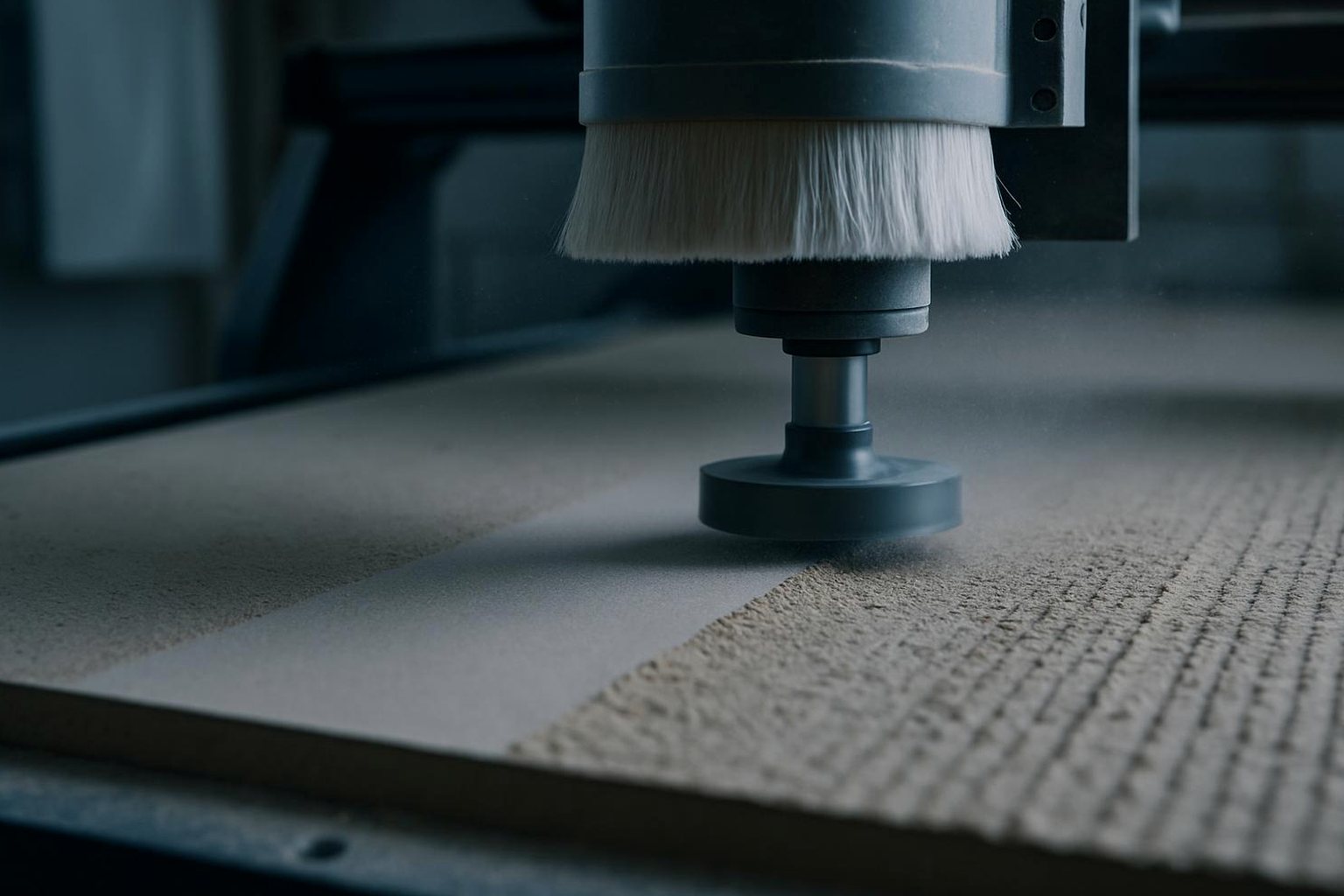
Why the spoilboard lies
A spoilboard looks flat until you need a 3 mm pocket to be 3 mm everywhere. MDF swells a little with humidity, gets cut into every day, and wears unevenly where most jobs sit. Shops chase pocket depth in CAM for weeks when the real fix is a fresh surface.
A quick test
Cut a shallow 0.3 mm pocket in a grid across the bed with a surfacing bit. Where the pocket disappears, the board is high. Where it is deep, the board is low. If the difference is more than about 0.2 mm across the area you use, it is time to surface.
Surfacing without waste
Take off only what you need, usually 0.3 to 0.5 mm. Log the date and the remaining thickness on the side of the machine. When the board gets down to about 12 mm, plan a replacement. In coastal shops, let a new MDF spoilboard sit in the workshop for a few days before surfacing it so it settles to the local humidity.
The slip we see most
Surfacing the whole board every week out of habit, which eats the board long before it needs replacing.
How you know it is working
Pocket depths match the drawing across the bed, and the log shows how much board is left.
Written by Pieter Vos, Service Manager. Pieter runs the quarterly service plans and the route weeks outside Gauteng.
Checklist
- Grid test before blaming CAM
- Surface only what is needed
- Log date and thickness
- Acclimatise new boards on the coast
Pair this runbook with
Stuck after the checklist? Email cnc@cncpme.co.za with your city, machine and a photo.