
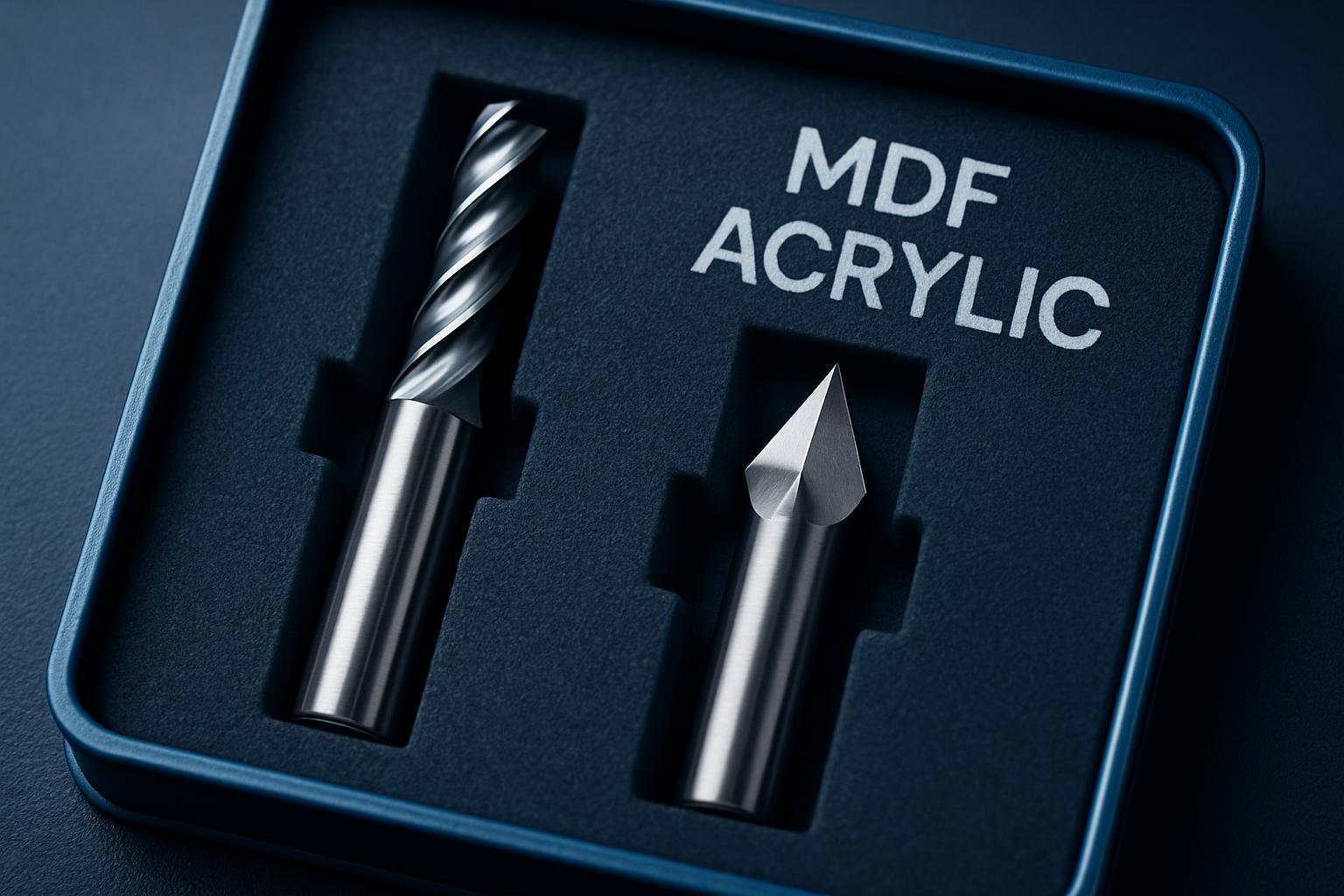
What is in the pack
- Shadow foam bit box
- Softwood and MDF set
- Acrylic set labelled
- Dull vs sharp lanes
- Friday audit card
| Shanks | 6 mm and 1/4 |
|---|---|
| Materials | Sheet goods |
| Foam | Silhouette return |
| Cadence | Friday audit |
| Spare | Two hero bits |
| Training | Bit care |
Who it is for
New router owners and shops that keep buying the wrong bit for the job, or cannot find the right one when it matters.
What it does on the floor
A curated bit box for South African sheet goods: down-cut and compression bits for melamine and MDF, an up-cut for pine and ply, an O-flute for acrylic, a set of V-bits for signage, and a surfacing bit. Each sits in a labelled foam silhouette.
It is deliberately small. Most first-year shops cut 90 percent of there jobs with five or six bits. Knowing those bits properly beats owning forty.
Mistakes we see in the first month
- Using one up-cut bit for everything, so melamine edges chip.
- Running acrylic with a wood bit and melting the edge.
- Keeping dull bits in the same box as sharp ones.
South African conditions
Local melamine-faced chipboard and SA pine both chew bits faster than people expect, especially boards with sand or grit in the core. Budget for replacements monthly, not yearly.
Space and power at a glance
A single drawer or wall rack next to the spindle side. Nothing to plug in.
Care at a glance
- Return every bit to its silhouette
- Wipe resin off bits after pine or ply
- Move any bit that burned or chipped to the dull lane
Spares worth keeping close: a second of your two most used bits, spare V-bit, replacement foam insert.
Before you email
Read the specs for the numbers, the layout notes for floor space and power, and the care routine for what the machine needs each week. Then email cnc@cncpme.co.za with your city, what you cut most, and a photo of the space.