
Floor
Education workshop
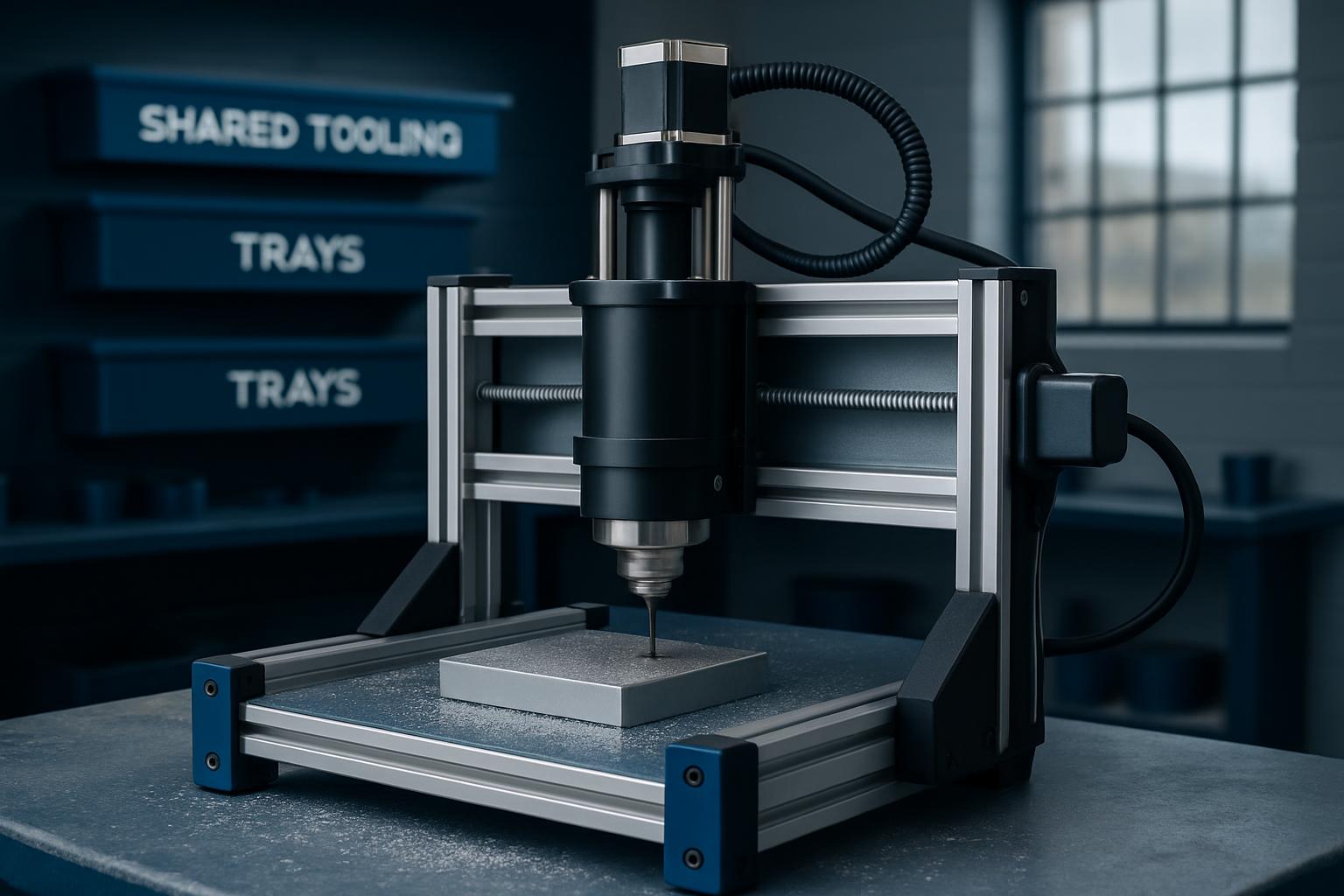
Training cells for colleges and hubs with shared trays that return.
Essentials on this floor
Runbooks to keep nearby
Shared machines, shared habits
Colleges and community maker spaces run one or two machines for many students. Tools go missing, bits get dull and nobody knows who closed the cell last. The floor works when trays are shared but clearly labelled, and every class ends with the same close-down routine.
How the trays work
Each group gets a tray with its own bits, collet wrench and safety glasses, all in shadow foam. The tray goes out at the start of class and comes back checked at the end. A missing item is spotted before students leave.
Fitting the timetable
Lessons are short. Plan jobs that run inside 20 minutes, and keep longer nests for after-hours supervised sessions. A simple period plan card on the wall helps lecturers keep the machine busy without rushing safety.
Who runs this floor
A lecturer or workshop technician, with groups of students who change every lesson.
A typical week
Trays go out at the start of each lesson and come back checked at the end. Longer jobs run in a supervised after-hours slot once or twice a week.
The gear, in one line each
- Training Cell Day: One-day production cell training at Jet Park for emerging crews.
- Tooling Starter: End mills and V-bits curated for SA sheet goods and first nests.
- Spindle Care Set: Collets, grease, and runout checks for daily spindle care on SA floors.
Next step
Open the essentials above for specs, layout and care, and keep the runbooks nearby. When you are ready, email cnc@cncpme.co.za with your city, a floor sketch and the floor name in the subject. See projects for shops that ran a similar floor.