
Floor
First production cell
Stand up a first CNC cell with hold-downs, dust, and care before the hero nest.
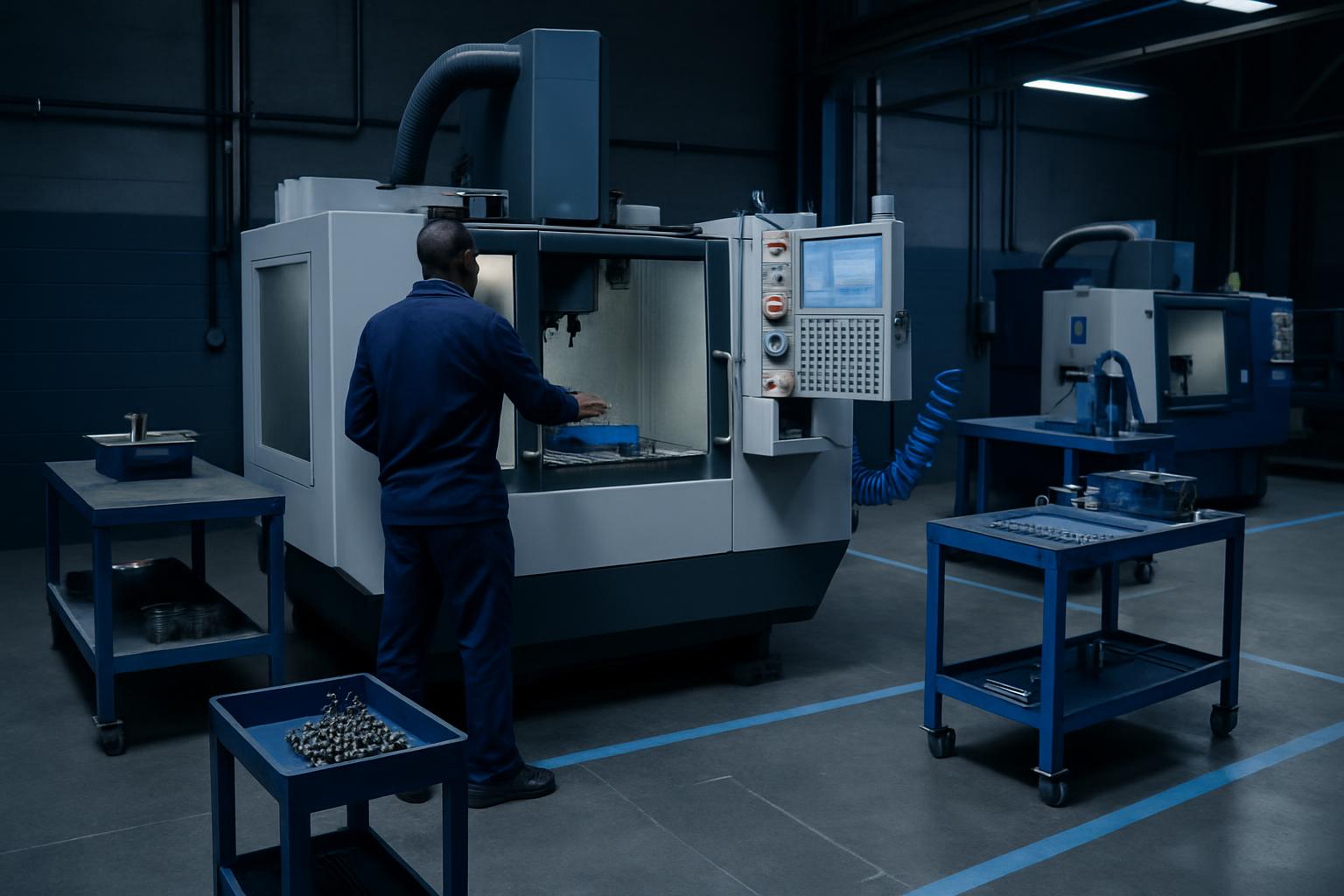
Essentials on this floor
Runbooks to keep nearby
What this floor is for
A first production cell is one router, one extraction unit and one person who owns both. The goal for the first three months is boring and important: every job comes off the bed the right size, the dust stays in the booth, and the machine is closed down properly every evening.
How to set it out
Put the router against a wall with the loading side facing the door, the dust booth on the opposite side to the walkway, and the bit and care cases on the wall beside the spindle. Leave the panel saw or offcut rack within three steps. In most small units a 4 x 3 m area is enough for a 6040 cell.
The first month
- Week one: hold-downs and zeroing on scrap.
- Week two: real jobs, but only the simple ones.
- Week three: start the care card and the Friday bit audit.
- Week four: write the first handoff note, even if you are the only operator.
Who runs this floor
Usually the owner, sometimes with one helper. They quote, cut and deliver, so the cell has to be simple enough to run between phone calls.
A typical week
Mornings for cutting, afternoons for finishing and deliveries. Shift close every day takes ten minutes: bit out, collet wiped, bed vacuumed, care card ticked.
The gear, in one line each
- Router 6040 Pro: Compact production router for plastics, woods, and soft aluminium on emerging floors.
- Dust Booth S: Compact extraction booth for single-router cells in emerging workshops.
- Tooling Starter: End mills and V-bits curated for SA sheet goods and first nests.
Next step
Open the essentials above for specs, layout and care, and keep the runbooks nearby. When you are ready, email cnc@cncpme.co.za with your city, a floor sketch and the floor name in the subject. See projects for shops that ran a similar floor.